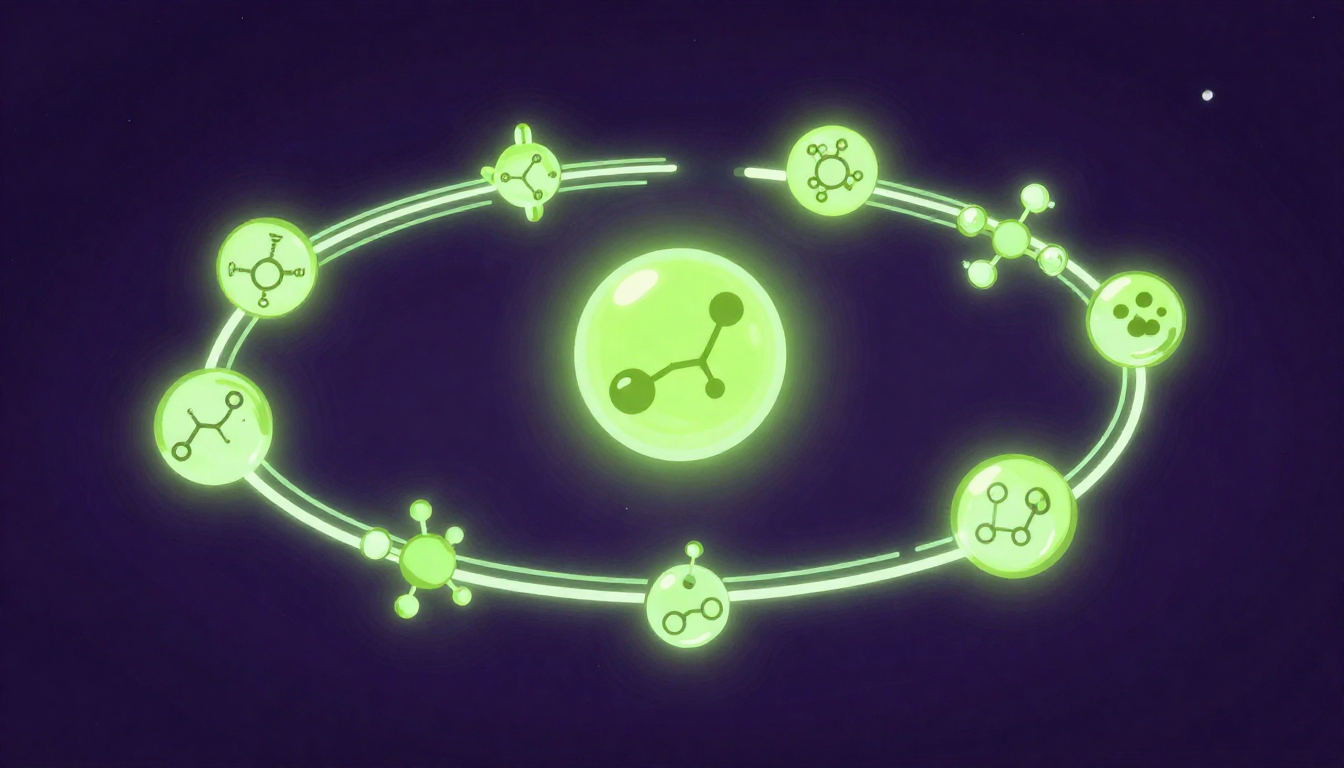
The Entourage Effect
How cannabinoids and terpenes combine to produce effects greater than the sum of their parts — the science, the evidence, and what it means for strain selection.
The Core Concept
First described by Israeli researcher Raphael Mechoulam in 1998, the entourage effect proposes that the hundreds of compounds in cannabis — cannabinoids, terpenes, flavonoids, and other phytochemicals — work together synergistically. The sum, the theory holds, is greater than its parts.
This has significant practical implications: two strains with identical THC percentages can produce dramatically different experiences based on their terpene and minor cannabinoid profiles. It also explains why pharmaceutical isolated THC (Marinol/dronabinol) is often less effective and more dysphoric than whole-plant preparations.
"The plant is ahead of us. We don't know all the compounds yet. And the interactions are incredibly complex."
Documented Synergistic Interactions
CBD negatively modulates CB1 receptors, reducing THC binding efficiency and dampening psychotomimetic effects including anxiety and paranoia.
Pinene inhibits acetylcholinesterase, potentially counteracting THC's disruption of short-term memory encoding in the hippocampus.
Caryophyllene activates CB2 receptors while CBD modulates TRPV and other inflammatory pathways — complementary anti-inflammatory mechanisms.
Linalool's GABA-A modulation complements CBD's effect on THC anxiety, with lavender-based preparations showing anxiolytic clinical evidence.
Myrcene may increase blood-brain barrier permeability, potentially enhancing cannabinoid CNS uptake. The 'eat mango before cannabis' folk remedy has some scientific basis.
Full-Spectrum vs. Isolate
Complete plant profile — cannabinoids, terpenes, flavonoids, chlorophyll, waxes. Preserves entourage interactions.
THC removed, all other compounds retained. Attempts to preserve entourage while eliminating intoxicant.
Single purified compound — typically CBD or THC at 99%+ purity. No synergistic compounds present.
Frequently Asked Questions
What is the entourage effect in cannabis?
+
The entourage effect is a proposed mechanism where cannabinoids, terpenes, and other phytochemicals in cannabis interact synergistically to produce effects that are qualitatively and quantitatively different from isolated compounds. Coined by Raphael Mechoulam in 1998, it suggests whole-plant preparations may be more therapeutically effective than isolated THC or CBD.
Is the entourage effect scientifically proven?
+
The entourage effect has substantial preclinical evidence and clinical plausibility, but rigorous human clinical trials directly proving it are limited. Key evidence includes: β-caryophyllene's direct CB2 activation, α-pinene's apparent THC memory counteraction, and CBD's modulation of THC anxiety. Most researchers consider it real but acknowledge the evidence base needs strengthening.
Does CBD counteract THC?
+
CBD modulates THC's effects through multiple mechanisms: negative allosteric modulation of CB1 receptors (reducing THC binding efficiency), 5-HT1A agonism (reducing anxiety), and FAAH inhibition (prolonging endocannabinoid activity). High-CBD strains and 1:1 products typically produce less anxiety and paranoia than high-THC alone.
What is full-spectrum vs. broad-spectrum vs. isolate?
+
Full-spectrum extracts contain the complete plant profile — cannabinoids, terpenes, flavonoids, and minor compounds. Broad-spectrum removes THC while retaining other compounds. Isolate is a single purified compound (typically CBD or THC). The entourage hypothesis predicts full-spectrum provides superior therapeutic outcomes, though this varies by condition and individual.