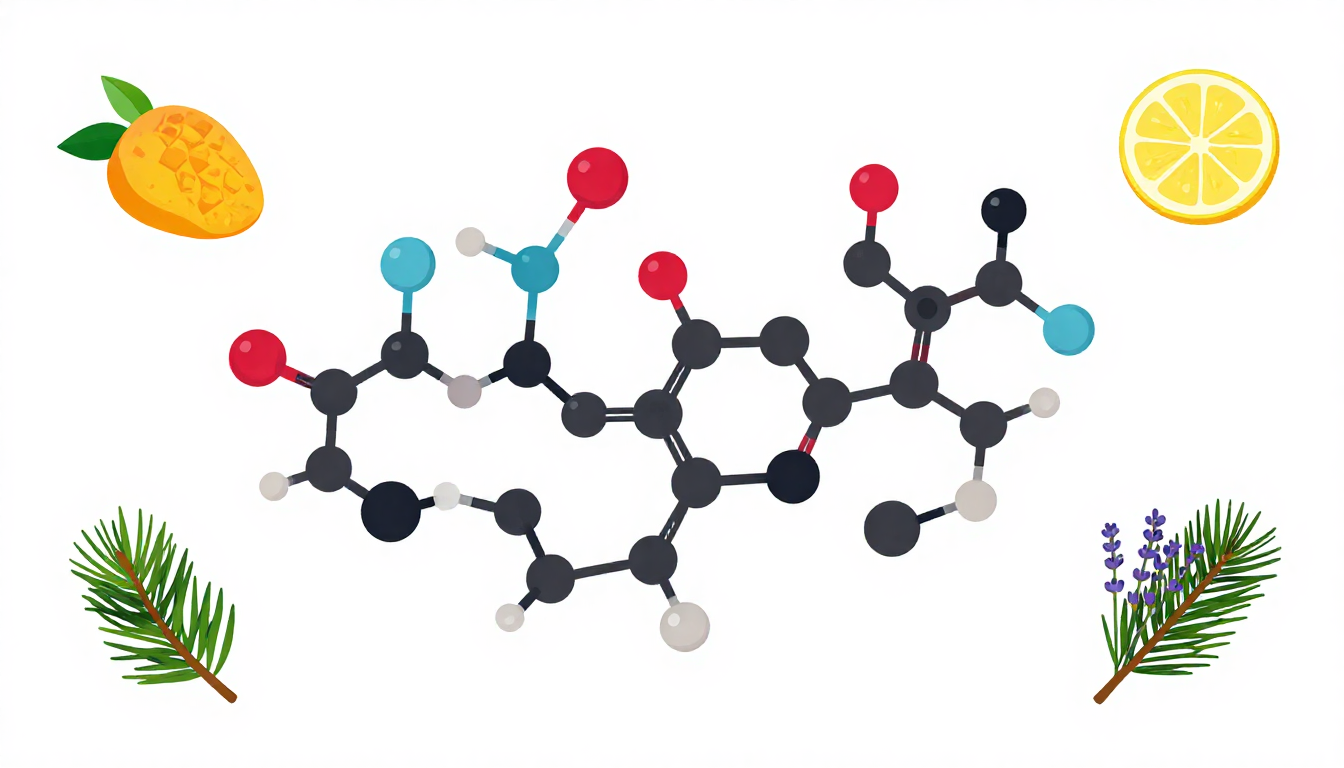
Cannabis Terpenes —
Complete Science Guide
The 20+ terpenes that define cannabis aroma, flavor, and effect — pharmacological mechanisms, clinical evidence, boiling points, and representative strains.
What Are Terpenes?
Terpenes are aromatic hydrocarbons produced in the trichomes of cannabis plants — the same structures that produce cannabinoids like THC and CBD. Over 200 distinct terpenes have been identified in cannabis, though most strains are dominated by 5–10 key compounds that define their characteristic aroma and flavor.
Beyond aroma, terpenes interact with cannabinoids and neurotransmitter systems through the entourage effect — a synergistic relationship where the combined profile produces qualitatively different effects than isolated compounds. This is why two strains with identical THC percentages can feel completely different.
Primary Terpenes — Detailed Reference
Myrcene
C₁₀H₁₆Most commonGABA-A modulation, enhances BBB permeability — may increase THC uptake speed and intensity.
Limonene
C₁₀H₁₆2nd most commonSerotonergic and dopaminergic modulation; anxiolytic effects demonstrated in clinical studies.
β-Caryophyllene
C₁₅H₂₄Top 3Only terpene that directly activates CB2 cannabinoid receptors — technically a dietary cannabinoid.
Linalool
C₁₀H₁₈OCommonGABA-A positive modulation; reduces glutamate-evoked seizures; anticonvulsant synergy with CBD.
α-Pinene
C₁₀H₁₆CommonAcetylcholinesterase inhibition — may counteract THC-induced memory impairment. Bronchodilator.
Terpinolene
C₁₀H₁₆Rare dominantAntioxidant; anticancer properties in vitro; sedative at high isolated concentrations.
Humulene
C₁₅H₂₄ModerateCB2 partial agonist; anti-inflammatory via PGE-2 inhibition; anorectic properties.
Ocimene
C₁₀H₁₆EmergingAntifungal, antiviral and decongestant properties documented in preclinical research.
Vaporization Temperature Guide
Terpenes evaporate at different temperatures. Vaporizing at lower temperatures preserves lighter terpenes; higher temperatures release heavier compounds.
Frequently Asked Questions
What are terpenes in cannabis?
+
Terpenes are aromatic organic compounds produced in the trichomes of cannabis plants. They create the plant's distinctive scent profiles and interact with cannabinoids to modulate effects through what's known as the entourage effect. Over 200 terpenes have been identified in cannabis, though typically 5–10 dominate any given strain's profile.
Do terpenes get you high?
+
Terpenes are not directly psychoactive in typical cannabis concentrations. However, they modify the quality and character of the cannabis experience by interacting with cannabinoids and neurotransmitter systems. Beta-caryophyllene is unique as it directly activates CB2 receptors, making it technically a dietary cannabinoid.
What is the most common cannabis terpene?
+
Myrcene is the most abundant terpene found in most commercial cannabis strains, often comprising 50%+ of the total terpene profile. It's associated with sedation, muscle relaxation, and the 'couch-lock' effect, and is found naturally in mangoes, hops, and lemongrass.
What temperature should I vaporize cannabis for terpenes?
+
Terpenes have varying boiling points. For maximum terpene preservation, vaporize at 157–185°C (315–365°F). Lower temperatures (157–165°C) capture lighter terpenes like α-pinene. Higher temperatures (185–210°C) release heavier terpenes like linalool. Most full-spectrum terpene sessions use 170–185°C.